Stitching Together Action
June Advocacy Update
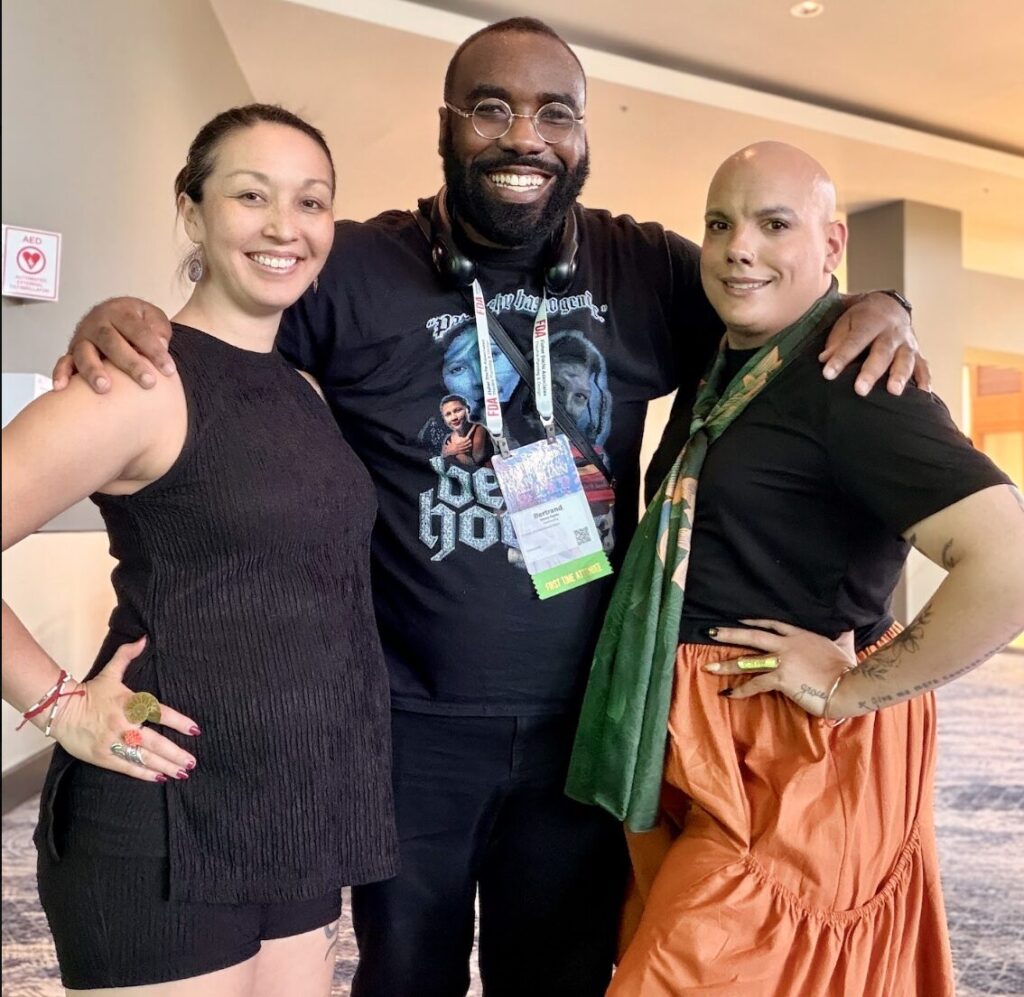
I’ve been thinking a lot about quilting this month. While textiles are a beautiful medium, I’ve been thinking less about fabric itself and more about what it means to stitch together different ideas, identities, histories, and cultures.
As Americans, we have inherited the unfinished task of stitching together a democracy not from one identity or the lowest common denominator, but from the many identities, histories, cultures, and ideas that make this country vibrant. That task has been handed to us by our ancestors, shaped by the promises and contradictions of the Constitution, and sharpened by the world’s expectations of what this country claims to be. As we continue experimenting with what that actually requires of us, one thing has become clear: we will need to figure it out together.
So let’s ask those questions together. I encourage Dance/USA members to join me for my next Office Hours on July 3, 1 pm EST. We will discuss what is happening in the country, how it impacts dance, what it asks of us as advocates, and where we still have power to act. Change and healing happen within community. If you are already part of the Dance/USA member community, I hope you will take advantage of that space and talk through these questions with us. And whether or not you are a Dance/USA member, I hope you will find your way to support the communities that are dear to you and begin asking, together, what comes next.
There is much we cannot control, but there is still much we can influence.
In solidarity,
Bertrand Evans-Taylor
Director of Government Affairs
advocacy@nulldanceusa.org
Take Action Now 📣
Action #1: Prepare Your Organization for Nonpartisan Voter Engagement
Independent Sector, Nonprofit VOTE, the League of Women Voters, and Bolder Advocacy have launched Voices in Action, a new initiative to help nonprofits engage their communities in the democratic process ahead of the 2026 midterm elections and beyond. Sign up to receive monthly nonpartisan resources, including key election deadlines, voter engagement guidance, outreach strategies, and tools to help your organization participate confidently and legally in civic life.
Action #2: Oppose Proposed Changes to Federal Grantmaking by July 13
The National Council of Nonprofits is urging nonprofits and stakeholders to respond to proposed changes from the U.S. Office of Management and Budget that would affect federal grants, cooperative agreements, and other monetary awards. If implemented, these changes could allow federal grants to be withheld, suspended, terminated, or changed mid-performance, creating financial uncertainty for nonprofits and other grantees. The proposal could also reduce transparency, increase political influence in federal grantmaking, and make it riskier for organizations to accept federal funds.
📰 Policy & Advocacy Updates
Supreme Court Declines to Intervene as Ruling Weakens Voting Rights for Non-English Speakers and Limits Who Can Defend Fair Elections
The U.S. Supreme Court has declined to review a ruling limiting the enforcement of Section 208 of the Voting Rights Act, a provision that protects voters who need assistance to cast a ballot, including voters with disabilities, voters who cannot read, and voters with limited English proficiency. The case began with a community organization that supports Spanish-speaking voters in Arkansas and challenged restrictions on voter assistance. By leaving the lower-court ruling in place, the Supreme Court allowed a decision to stand that says private individuals and organizations cannot bring lawsuits under Section 208 in the seven states covered by the 8th U.S. Circuit Court of Appeals. Instead, enforcement would depend on action by the federal government.
The result is dangerous on two levels: it weakens practical protections for voters who rely on language or literacy assistance, and it limits the ability of individuals and community organizations to directly petition the courts when they believe fair election access has been denied. For arts advocates, this is a civic infrastructure issue. Voting rights shape who has power over public funding, education, cultural policy, public space, and community life, and when access to the ballot is narrowed, the effects reach far beyond Election Day.
Arts & Culture Power and Control Wheel Names Structural Harm in the Field
Arts administrator and cultural strategist Quanice G. Floyd has released the Arts & Culture Power and Control Wheel and the Arts & Culture Liberation Wheel. These two frameworks help name how harm operates in arts and culture spaces and what repair can look like. Adapted from the lineage of the domestic violence Power and Control Wheel, the arts and culture version identifies patterns such as cultural gatekeeping, resource hoarding, labor exploitation, narrative control, isolation, erasure, psychological abuse, and physical and sexual abuse. The companion Liberation Wheel points toward shared accountability, power-sharing, equitable resource flow, truth and repair, healing-centered workplaces, collective care, and survivor justice. For arts advocates, these frameworks make clear that advocacy is not only about protecting the field from outside threats; it is also about transforming the internal conditions that artists, cultural workers, and communities experience within the field.
Dance and Theatre Meet as Storytelling Forms at TCG and the Tonys