Reflecting on Dance Forum 2026

Thank you to those of us who joined us for Dance/USA’s 2026 Dance Forum on January 9!

This year’s Forum focused on what is working in the dance ecosystem, in this moment defined by uncertainty, funding challenges, violence, and rapid change. Speakers and participants shared their strategies for sustaining touring and presenting dance: creative funding models, resource sharing, accessibility practices, and ways organizations are sharing knowledge rather than starting from scratch.

If you were there, please fill out this survey and share with us your Dance Forum experience.

Included in this year’s survey is the opportunity to tell us your Dance Success Story! We invite you to share a moment when your creative strategy and/or advocacy led to a positive outcome for you or your organization.

After the overwhelmingly positive response to last year’s session on Dance Success Stories produced by the Dance Managers Collective, we decided to make that format the focus of this year’s gathering. Interim Executive Director Sara Nash opened the Forum by naming the realities many in the room are facing—fear, worry, and anger—while emphasizing why it remains essential to center success, resilience, and shared learning.

“Dance is intrinsic to our understanding of the human experience, and we need more of that, not less,” she said.

ID in caption.
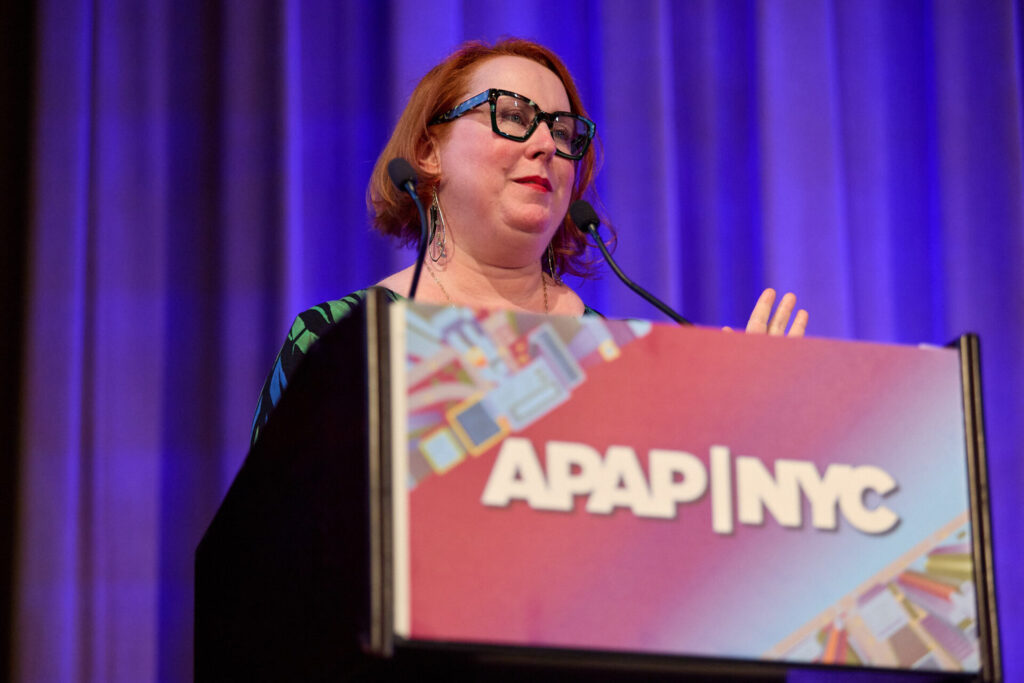
Sara Nash stands behind an APAP|NYC podium, gesturing while addressing the audience against a purple-lit stage backdrop.

We also want to acknowledge and thank Former Board Chair Abdo Sayegh Rodriguez and Board Chair Juan José Escalante for their stewardship and remarks at Dance Forum and within our organization.

Juan JosĂ© shared an update on our search for a new Executive Director, offering transparency into the process and the organization’s next steps: 114 applications have been received from all over the world. The top 8 candidates have been identified, and the first round of interviews has begun. We hope to have the position filled by late February or early March.

Led by moderators Lisa Mount and MK Wegmann, Dance Success Stories panelists shared inspiring success stories from their work in the dance ecosystem.

ID in caption.
Lisa Mount and MK Wegmann stand at a podium on a stage, presenting at a dance conference, with a large screen behind them reading “Dance Success Stories created by the Dance Managers Collective.”

MK shared, “in my fifty-one years in the arts, I have never seen an environment like this. But do not despair; despair forces us to succumb to a worldview to which we do not agree.”

Dance Success Stories remind us to think about what is already working, and what holds us up—where we find success when the support mechanisms that once held the dance ecosystem together are quickly disappearing.

This year’s stories centered dialogue around presenting and touring dance. Read more below!

Guiding Accessibility in Performing Arts Spaces

Danae Rees — Executive Director, AXIS Dance

ID in caption.
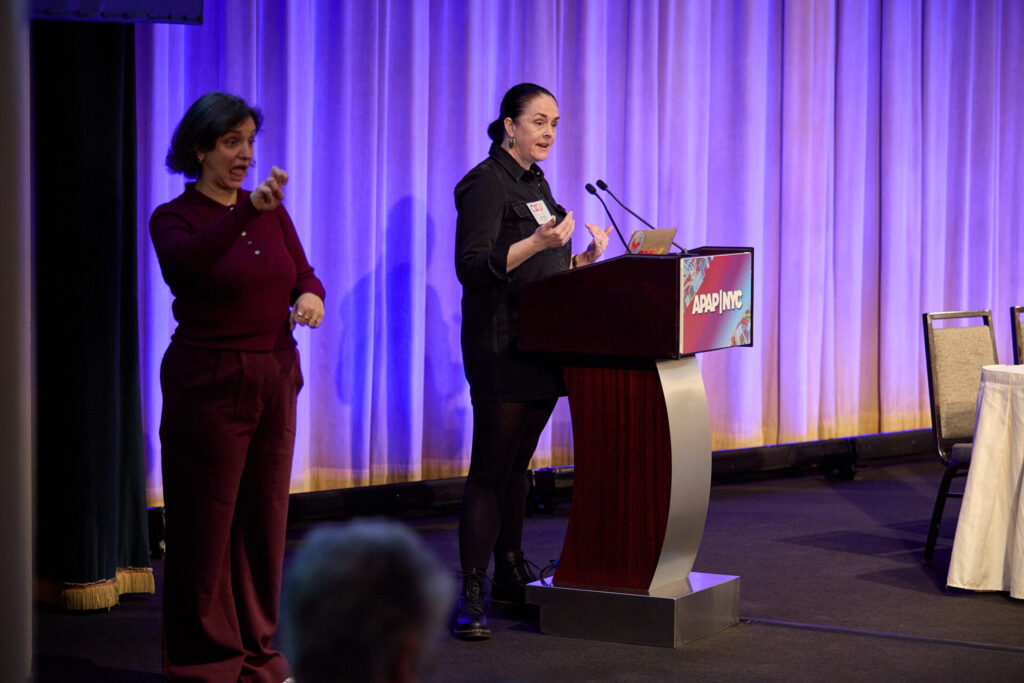
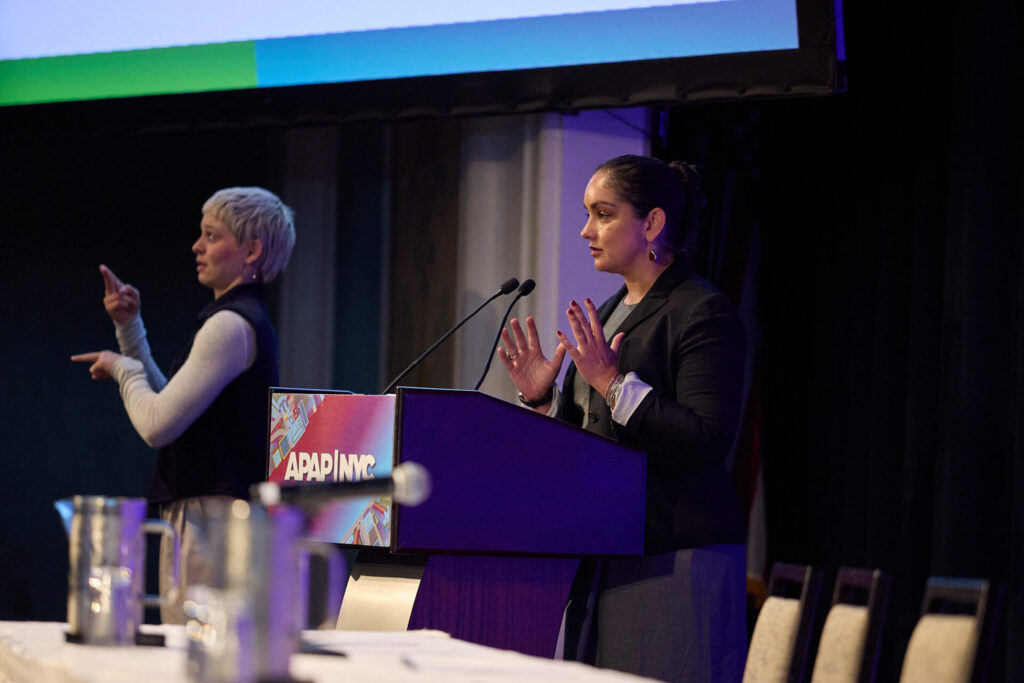
Danae Rees speaks at a podium on a conference stage while an ASL interpreter stands beside her signing, with purple-lit curtains and an APAP|NYC podium backdrop.

AXIS Dance is a self-booking company that works directly with presenters. They work to make spaces accessible for artists, venue workers, administrators, and audiences.

To support their work, they created The Access Guide for Presenting & Touring the Performing Arts.

Aimed at venues and presenters keen on advancing their understanding of accessibility, this online resource addresses the critical and overdue need for accessible dance and performing arts spaces.

For example, many ticketing and registration softwares aren’t accessible. But there are options that can help presenters make better seating choices for folks who have access needs.

“We hope that one day, this guide becomes ‘out of date,’” Rees said, because these practices will have become widely implemented and inherent to the way we create and operate performance spaces.

Removing Emotional Barriers to Access

Mark Wilson — Executive Director, Zoellner Arts Center at Lehigh University

ID in caption.
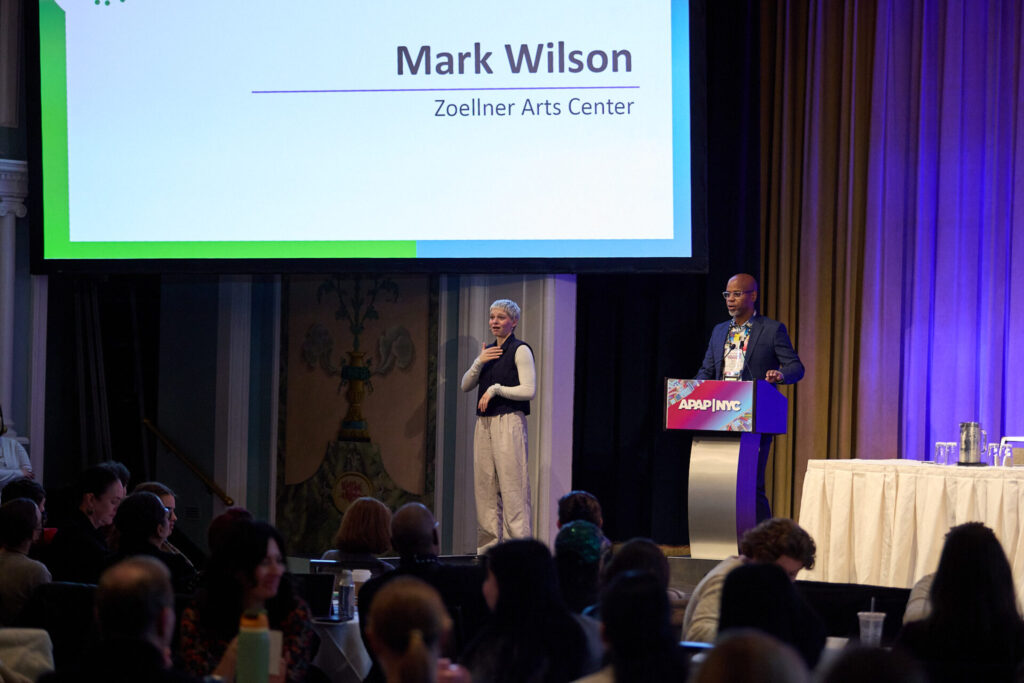
Mark Wilson stands at an APAP|NYC podium addressing an audience while an ASL interpreter signs beside him; a large screen overhead reads “Mark Wilson, Zoellner Arts Center.”

The community in Bethlehem, PA, asserted that while there weren’t physical barriers to accessing the programming at Lehigh University’s Zoellner Arts Center, there were emotional barriers. And in their efforts to remedy this, Wilson and the team at Zoellner did not want to tell the community what they needed. Removing these emotional barriers required the organization to cede power and listen.

That approach shaped their work with Calpulli Mexican Dance Company. Over the 18 months leading up to the performances, the team spent sustained time in the community, meeting people where they were. This process shifted the community from audience to collaborator, allowing them to help shape the kind of programming they wanted to see at the Center.

“While we are often the content experts, the people in the community are the context experts,” Wilson said.

They bring touring dance companies to visit elementary schools and the local Hispanic center, and hold school-day performances for K-12 students and other public performances. They communicate early and often with arts and community partners to make these opportunities possible.

Supporting Each Other to Support the Work

Adrienne Petrillo — Interim Director of Program Strategy, NEFA

ID in caption.
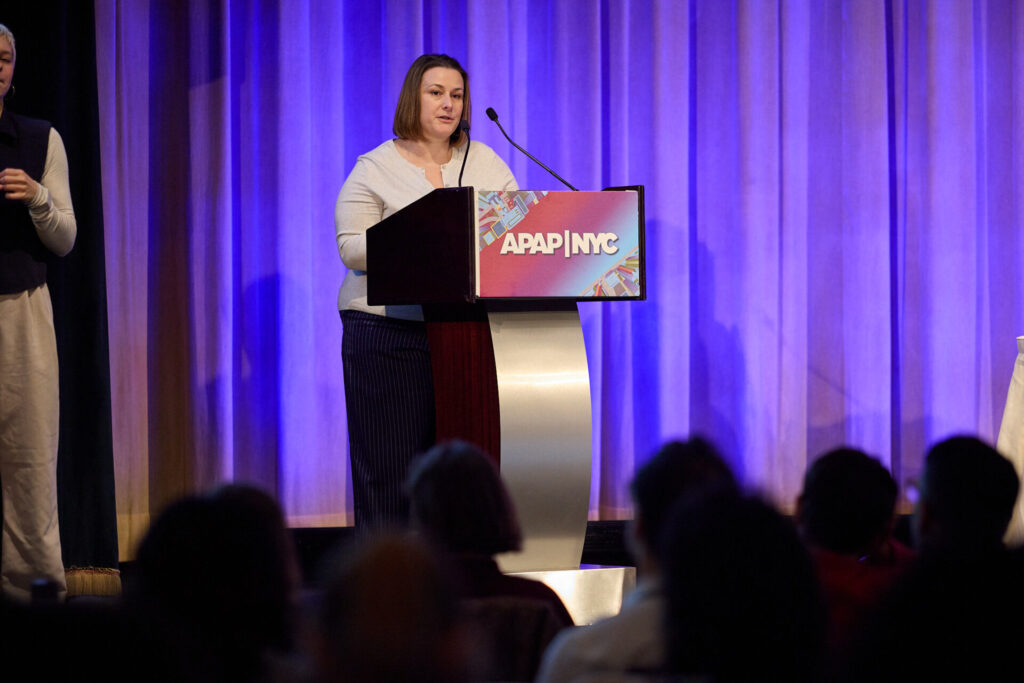
Adrienne Petrillo stands at an APAP|NYC podium addressing an audience, with an ASL interpreter partially visible to the side against a purple-lit stage backdrop.

Petrillo shared a story about NEFA’s new grant opportunity: Crossroads: Touring New England. Crossroads funds tours of regional, national, or international artists presented by New England nonprofit organizations.

NEFA collaborates on the overall tour planning with artists and presenters, including the ___ of activities for local communities. Most recently they’ve supported the Institute of Contemporary Art/Boston, Bates Dance Festival, and Motion State Arts in presenting work by Leslie Cuyjet.

Motion State Arts expressed interest in supporting an artist’s older work, because the life cycle of a dance is often so short.

While each presenter on the tour has agency in collaboration with the artist to create a unique event and performance, they work together to cross-promote, with larger organizations like ICA and Bates supporting publicity efforts for smaller organizations like Motion State Arts.

Creating Revenue Beyond Ticket Sales

Aisha Ahmad-Post — Executive Director, The Robert and Judi Newman Center for the Performing Arts at the University of Denver

ID in caption.
Aisha Ahmad-Post gestures while presenting at an APAP|NYC podium as an ASL interpreter signs beside her on a conference stage.

The Newman Center for the Performing Arts boasts a one thousand-seat opera hall which Ahmad-Post affectionately called “both the joy and the bane of [her] existence.” Simply because not every artist they program and present is able to fill one thousand seats.

Ahmad-Post and her team want artists to have opportunities beyond the concert hall; they want to de-center performance as the singular event of a residency. But this raises an important question: how will they fund these performances?

One example: When an artist brought programming to a local public school, they were able to fund that project via a grant from the city intended to support education funds. Ultimately, these new ventures allowed the Newman Center to reach seven-hundred and fifty more people across local communities.

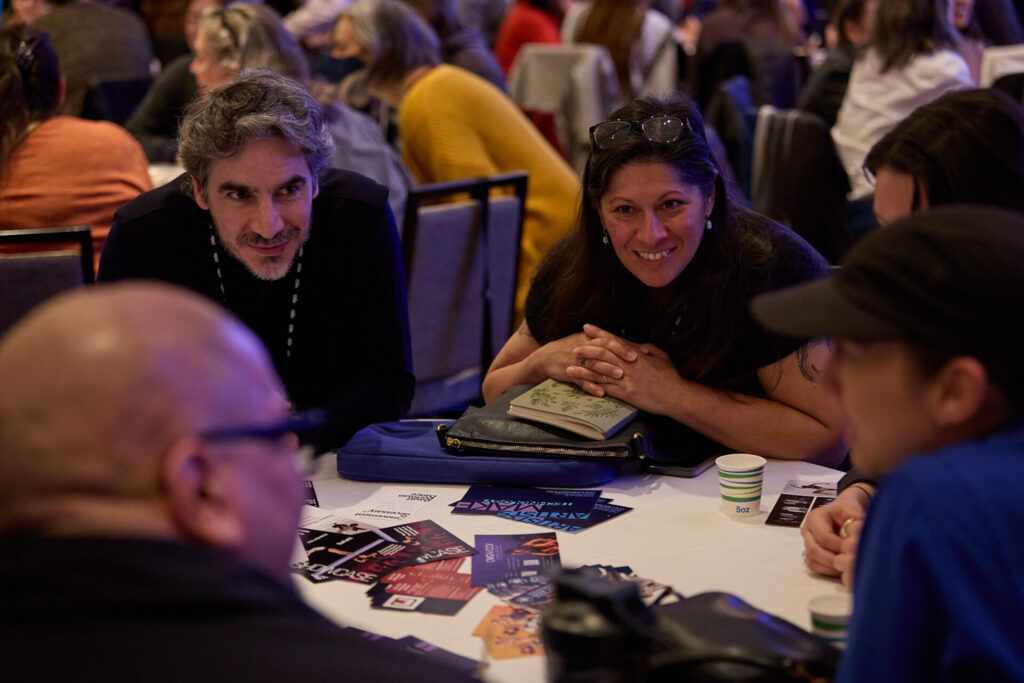
After the Dance Success Stories panel, Forum participants continued the conversation in small groups, followed by reflections from volunteers.

ID in caption.
Several conference attendees sit around a table in conversation, smiling and leaning in toward one another, with programs, postcards, and coffee cups spread across the table in a busy networking setting.
  • One shared the success when each company in residence passes community relationships to the next artist, creating continuity rather than starting from scratch.
  • Another described community-led fundraising efforts— including a New Orleans house giveaway—designed to ensure artists earn living wages.
  • A third reflected on how centering deeply personal subject matter, such as women’s healthcare, has strengthened audience connection and expanded reach.
ID in caption.
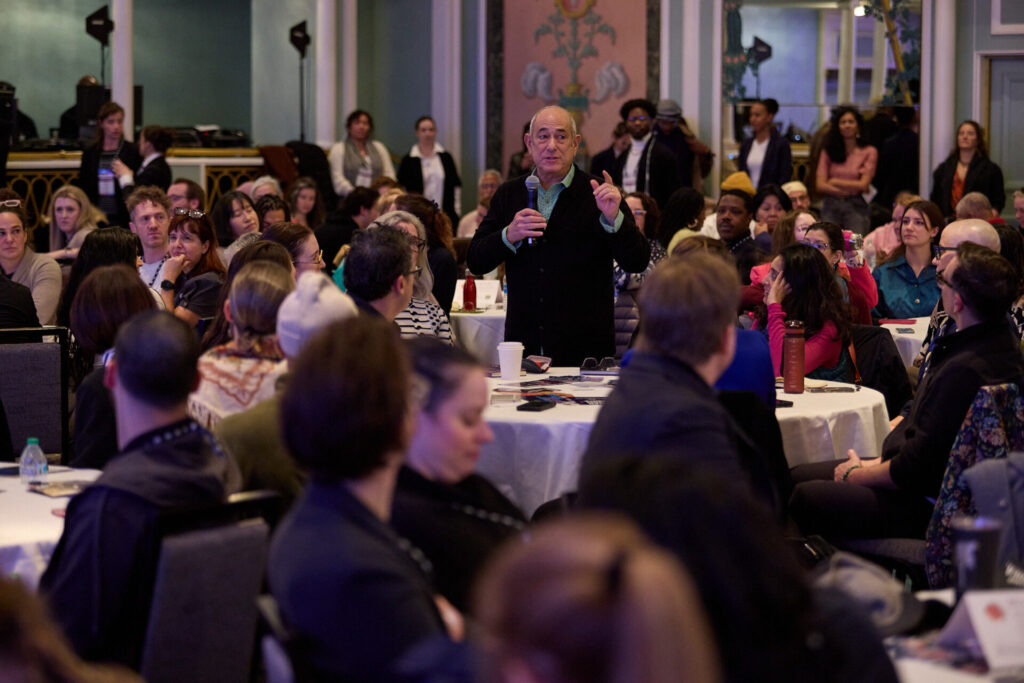
David Dorfman stands holding a microphone and speaking during a large conference discussion, surrounded by seated attendees at round tables in a crowded ballroom.

Across these stories, a shared throughline emerged: sustainability in dance is being built through collaboration, redistribution of power, and a willingness to rethink long-standing norms. Together, we are actively envisioning and practicing new ways of supporting artists, presenters, and communities.

Thank you for being part of the Dance/USA community and for contributing to this ongoing work.

Photos by Lexi Webster.

The owner of this website has made a commitment to accessibility and inclusion, please report any problems that you encounter using the contact form on this website. This site uses the WP ADA Compliance Check plugin to enhance accessibility.
Dance/USA
Privacy Overview

This website uses cookies so that we can provide you with the best user experience possible. Cookie information is stored in your browser and performs functions such as recognising you when you return to our website and helping our team to understand which sections of the website you find most interesting and useful.